
Bouldering is the easiest way into climbing, full stop. No rope, no harness, nobody standing at the bottom holding your life in their hands. Just you, a wall, and a pad. That stripped-down simplicity is the whole appeal, and it's why bouldering asks for less gear than any other discipline.
So before you go filling a cart, read this. Most of what you actually need on day one, the gym already owns. Rent first. Buy slow. Here's the honest breakdown of beginner bouldering gear: what's essential, what's nice-to-have, and what only matters the day you climb outside.
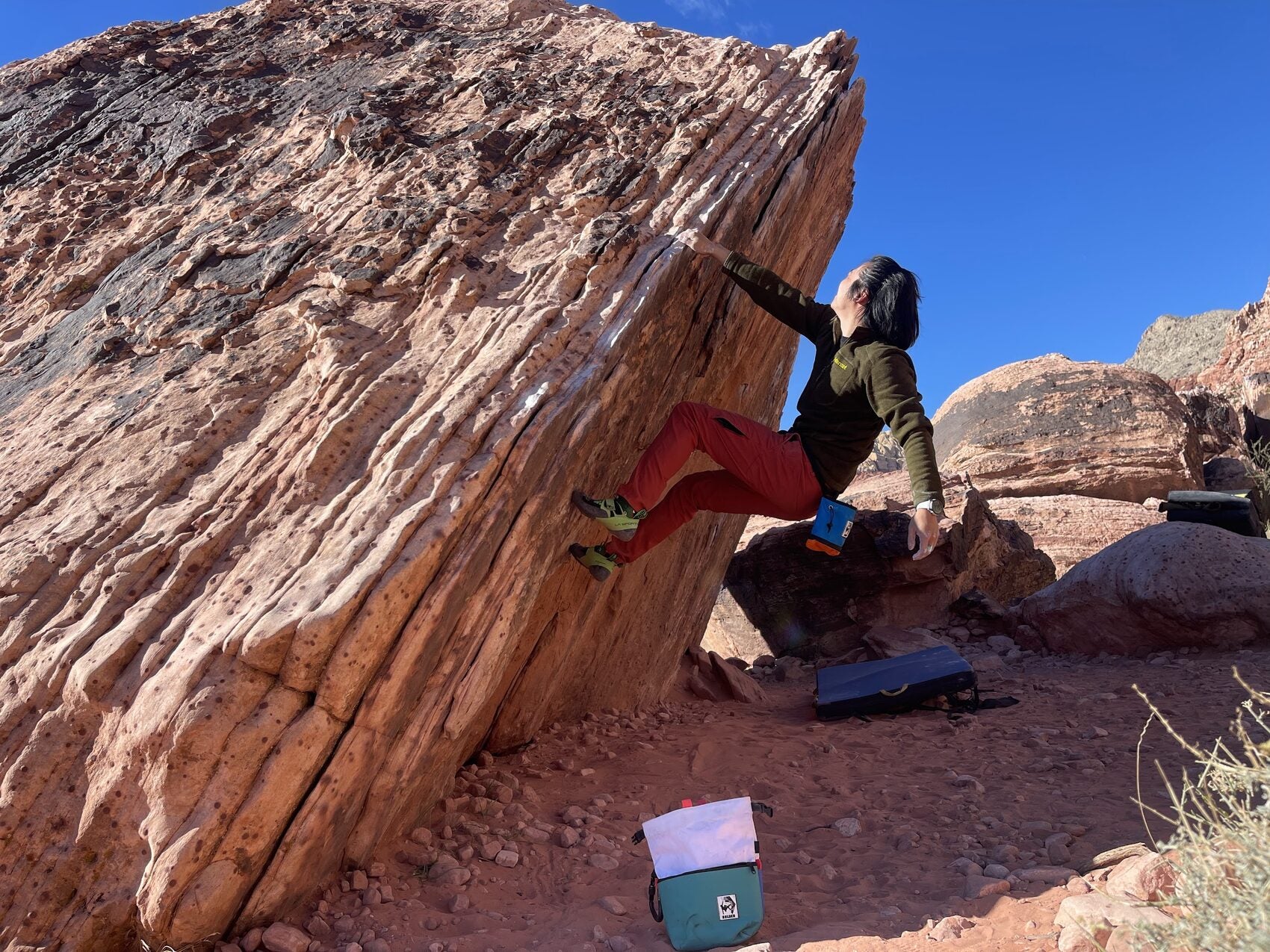
Start at the gym. Don't overspend day one.
Walk into any bouldering gym and you can rent shoes and grab chalk for a few dollars. That's the point. You don't know yet whether you'll fall for it, what shoe shape fits your foot, or whether you'll show up twice a week or twice a year.
So climb five or six sessions in rental shoes first. You'll figure out what bugs you, what you keep reaching for, and what's worth owning. Then buy.
Essential gear
Climbing shoes
This is your first real purchase. Rentals are flat, stiff, and stretched soft by a hundred other feet before yours. A pair of your own climbs better and feels better, and it's an upgrade you'll notice right away.
For a beginner, you want a neutral, flat-lasted shoe. Skip the aggressive downturned models built for steep overhangs and tiny edges. Those hurt, and you don't need the performance yet. A comfortable all-day shoe will teach you footwork faster for one simple reason: you'll actually keep it on. Fit snug, not painful: toes touching the end, lightly curled, no dead space.
Chalk
Chalk dries the sweat on your hands so you actually hold the wall instead of greasing off it. Loose chalk gives the best coverage and feel. A chunkier, less-dusty blend keeps your hands coated without fogging up the whole gym. The Pow Day chalk is a medium-chunky 200g loose chalk that breaks down to a fine coat as you work it in. If your gym restricts loose chalk, a refillable chalk ball keeps the dust down and travels clean. New to chalk and not sure what to grab? The best climbing chalk guide breaks down loose, chunky, and block, plus how to read purity.
A chalk bucket or chalk bag
You need something to hold all that chalk. For bouldering, a wide, open chalk bucket is the standard. You park it on the ground at the base of the problem and dip between attempts, instead of wearing a bag on your hip like a rope climber. A bucket holds more chalk, fits a brush, and is easier to plunge a whole hand into mid-session. The Bolder chalk bucket is built for exactly that: wide mouth, brush holder, sits flat at the base of the wall. If ropes are in your future too, a chalk bag covers the harness side, and the chalk bag vs chalk bucket breakdown explains when each earns its spot.
Nice-to-have gear
A brush
Holds collect skin oil, sweat, and old chalk, and after enough traffic they go slick. A brush scrubs them clean so they grip again. It's about the cheapest upgrade to your climbing that exists, and brushing the holds you've gunked up is just good manners. A boar's hair or stiff synthetic brush is all you need. The bouldering brush clips to a bucket and reaches most gym holds.
Skin care
New climbers tear skin, split tips, and dry out fast, because the skin on your hands hasn't toughened up yet. A salve or balm helps it bounce back between sessions. The After-Session Salve goes on after you wash up, to rehydrate and speed healing. Just don't slather it on right before climbing: you want dry hands on the wall, not slippery ones.
Tape
Climbing tape protects splits, covers flappers, and gives a tweaky finger some backup. You won't reach for it every session as a beginner, but a roll buried in your bag can save a torn tip from cutting your day short.
Training tools
Skip these at the start. Climbing is the best training for climbing, and beginners get strong shockingly fast just by climbing. Yanking hard on a fingerboard before your tendons have caught up is how you get injured. Once you've got a year or so under your belt, a portable hold is a low-risk way in. The 3D-printed training block is a hangboard you can use anywhere, handy for warming up before you pull on plastic. Treat it as a warm-up and prehab tool, not a beginner essential.
Outdoor-only gear
A crash pad
Indoors, the floor does the padding for you. Outdoors, you are the padding department. A crash pad is a folding foam mat you set under the problem to soften your landing. This is non-negotiable for outdoor bouldering, and most people climb with several pads and a spotter, not just one. Good news: you don't need to own one to start. Go with friends who have pads, or rent.
A brush (and a bigger one)
Outdoor holds get polished and caked with chalk just like indoor ones, except there's no staff coming through to tidy up. A brush is essential outside, both to clean holds and to scrub off excess chalk and tick marks when you leave. A telescoping brush earns its keep on tall problems where the good holds sit out of reach.
The leave-no-trace kit
Bouldering outdoors comes with a chore: cleaning up after yourself. Brush off your chalk, pack out your tape scraps, and don't leave a constellation of tick marks behind you. The crag stays open because climbers take care of it, so be one of the ones who does.
The checklist at a glance
| Gear | Category | Buy day one? |
|---|---|---|
| Climbing shoes | Essential | Rent first, then buy |
| Chalk | Essential | Rent/borrow first, cheap to own |
| Chalk bucket or bag | Essential | Buy once you own chalk |
| Brush | Nice-to-have | Yes, it's cheap |
| Skin salve | Nice-to-have | When your hands tear |
| Tape | Nice-to-have | Keep a roll in your bag |
| Training tools | Nice-to-have | Wait a year |
| Crash pad | Outdoor-only | Only for outside |
| Telescoping brush | Outdoor-only | Only for outside |
FAQ
Do I need my own shoes to start bouldering? No. Every gym rents shoes, and rentals are perfectly fine for your first handful of sessions. Buy your own once you know you're sticking with it and you've figured out what actually fits your foot.
What chalk should a beginner buy? Loose chalk is the standard and gives the best coverage. A medium-chunky blend like Pow Day is less dusty and easy to work with. If your gym only allows chalk balls, a refillable chalk ball keeps the mess down. Under the hood, any climbing chalk is just magnesium carbonate, so don't lose sleep over the brand when you're starting out.
Chalk bucket or chalk bag for bouldering? A bucket. Boulderers set the chalk on the ground and dip between attempts, so a wide open bucket like the Bolder bucket is far more practical than a hip bag. Clip-on bags are really a roped-climbing thing.
How much does it cost to get started bouldering? Almost nothing on day one: a gym pass plus a few dollars for shoe and chalk rental. Once you're hooked, budget for shoes first, then chalk and a bucket, then a brush.
When should I start using a hangboard or training tools? Not as a beginner. Your tendons and pulleys need time to catch up, and pulling hard too early is a fast track to injury. Climb for a year, then bring in structured grip work like a training block carefully, and mostly as a warm-up. For now, climbing is your training.
Do I need a crash pad if I only climb in the gym? No. Gym floors are already padded for you. A crash pad is strictly outdoor gear. Borrow or rent one for your first few outdoor trips before you go buying your own.
Keep it simple. Rent until you're hooked, then buy shoes, chalk, and something to hold the chalk. Everything after that comes with time and a little torn skin. When you're ready to build out your own kit, the Bolder chalk bucket and Pow Day chalk are a solid place to start. Browse the rest at all products.