
Chalk is the cheapest thing in your bag that shows up on every send. It dries your hands, kills the friction you'd otherwise lose to sweat, and buys you a few seconds on the crux before your fingers grease off. Trouble is, "chalk" covers a lot of ground: loose, chunky, block, balls, liquid. Some of it's pure. Some of it's padded out with fillers you'll never miss.
So here's the straight version: what climbing chalk actually is, the formats worth knowing, how to read purity without squinting, and what's worth putting in your bag.
The short answer
Buy 100% magnesium carbonate, nothing added. That's the chalk that actually grips, and it's what the whole climbing world runs on. Drying agents, fillers, and boutique branding are either a niche fix or a markup.
The catch is that "pure" and "cheap" almost never share a bag. Friction Labs and Rúngne are pure, but they run north of $3 an ounce. The budget tubs hit their price by cutting in a drying agent or a filler. Sesh Pow Day is the exception: 100% magnesium carbonate at about $1.40 an ounce, the cheapest pure chalk in the comparison below. For most climbers, that's the whole decision. The rest of this guide is the reasoning, plus the few cases where a ball, liquid, or drying agent earns its place.
What climbing chalk actually is
Climbing chalk is magnesium carbonate. Not the calcium carbonate they hand you at the blackboard in grade school. Magnesium carbonate is a fine white powder that pulls moisture and oil off your skin, and that's the whole job: less sweat on your fingertips means more friction between skin and rock.
Gymnasts have been dusting up with the same stuff for decades. The climbing version is the exact same compound, just ground finer or left chunkier depending on the product. Everything past that is format, grind, and whatever (if anything) got dumped in the bag.
The formats: loose, chunky, block, ball, liquid
There's no single best format here. There's the format that fits your skin, your gym's rules, and how you like to chalk up.
| Format | What it is | Pros | Cons | Best for |
|---|---|---|---|---|
| Loose | Fine to medium ground chalk, poured into your bag | Fast, full coverage, easy to share a pinch | Dusty, spills, banned in some gyms | Most climbers, outdoor sessions |
| Chunky | Loose chalk left in larger pieces you crush by hand | Coverage control, less airborne haze than fine | Still loose, still gym-restricted | Climbers who want grip control |
| Block | A pressed brick you break down yourself | Cheapest by weight, less shipping dust | You have to crush it | Budget-minded, frequent refillers |
| Chalk ball | A porous pouch that dispenses through mesh | Low dust, controlled amount, gym-legal, refillable | Lighter coverage, slower to coat | Gyms with chalk rules, sweaty hands |
| Liquid | Mag carbonate in alcohol you rub on and dry | Near-zero dust, long-lasting base layer | Dries skin, costs more, needs reapplying | Gym bans, shared walls, a base coat |
Plenty of climbers stack two formats: a liquid base layer to lay down a clean foundation, then loose or chunky on top once the session's going. That combo outlasts either one on its own.
Purity and additives: what is actually in the bag
Pure magnesium carbonate
The good stuff is 100% magnesium carbonate. Nothing else in the bag. It absorbs moisture, it grips, and every gram you pay for is chalk. Sesh Pow Day Chalk is 100% magnesium carbonate, ground medium-chunky, in a 200g bag. Medium-chunky splits the difference on purpose: finer than a raw block, coarser than the powder-fine stuff gyms sell. You get full coverage, more control over the grip, and less of the airborne haze that ultra-fine chalk kicks up.
Drying agents and fillers
Some chalk throws in a drying agent to push absorption harder for hands that sweat buckets. It can earn its keep if you genuinely sweat through pure chalk, but it also dries your skin faster, which shows up as more cracking and more tape by the back half of a season.
Then there are fillers: cheap inert powders mixed in to bulk up a bag and shave the cost. Fillers don't do a thing for grip. They're dead weight, watering down the chalk you actually want on your fingers. If a bag is suspiciously cheap and cagey about what's in it, assume it's been cut.
The rule is boring but it holds: read the label. If it says 100% magnesium carbonate, you know exactly what you're getting. Save the drying agent for after you've tried pure chalk and your hands still sweat through it.
How popular chalks compare
Most climbing chalk is the same compound underneath, so the real differences boil down to grind and format, whether there's a drying agent in it, and what you're paying per ounce. Here's how some of the widely used chalks stack up, sorted by price per ounce:
| Chalk | Form | What's in it | Size / price | ~ Per oz* |
|---|---|---|---|---|
| Metolius Super Chalk | Loose | Magnesium carbonate + drying agent | 15 oz / ~$16 | ~$1.05 |
| Sesh Pow Day | Loose, chunky + powder | 100% magnesium carbonate | 200 g / $10 | ~$1.40 |
| Black Diamond White Gold | Loose | Magnesium carbonate | 300 g / ~$17 | ~$1.60 |
| Sesh Chalk Ball | Refillable ball | 100% magnesium carbonate | 60 g / $5 | ~$2.35 |
| Friction Labs Unicorn Dust | Loose, powder + chunks | High purity, no drying agents | 6 oz / ~$20 | ~$3.35 |
| Rúngne Magdust | Loose, chunky + powder | 100% magnesium carbonate | 200 g / $24 | ~$3.40 |
*Prices approximate, USD, as of June 2026. Per-ounce figures use each brand's listed retail size; smaller bags cost more per ounce. Check current pricing before you buy.
Among the 100% magnesium carbonate chalks with nothing added, Sesh Pow Day is the cheapest by a wide margin: a 200 g bag runs $10, versus $24 for the same-size Rúngne Magdust (Magnus Midtbø's brand) and about $20 for 6 oz of Friction Labs. Black Diamond White Gold sits close on price per ounce. The only chalk here that's cheaper per ounce is Metolius Super Chalk, and it gets there by adding a drying agent (its packaging carries a Prop 65 urethane warning) and selling a big 15 oz tub. So for pure chalk, Sesh is the cheapest option on this list; if you'll trade for a drying agent to chase maximum dryness, Metolius comes in cheaper still. Liquid chalks (Friction Labs Secret Stuff, Mammut Liquid Chalk, Rúngne's Magjuice) run about $13–17 and cover the gym-ban use case from the format table above.
How much chalk to actually use
More chalk isn't more friction. Past a thin even layer, the extra just sits on top and gets between your skin and the rock. Pile it on and holds start feeling worse, not better.
- Coat, then blow off the excess. A light, even layer beats a thick cake every time.
- Chalk the contact points. Fingertips and the pads that actually touch rock, not your whole palm out of habit.
- Reapply when you feel slick, not on autopilot. Chalking between every move is usually nerves talking, not need.
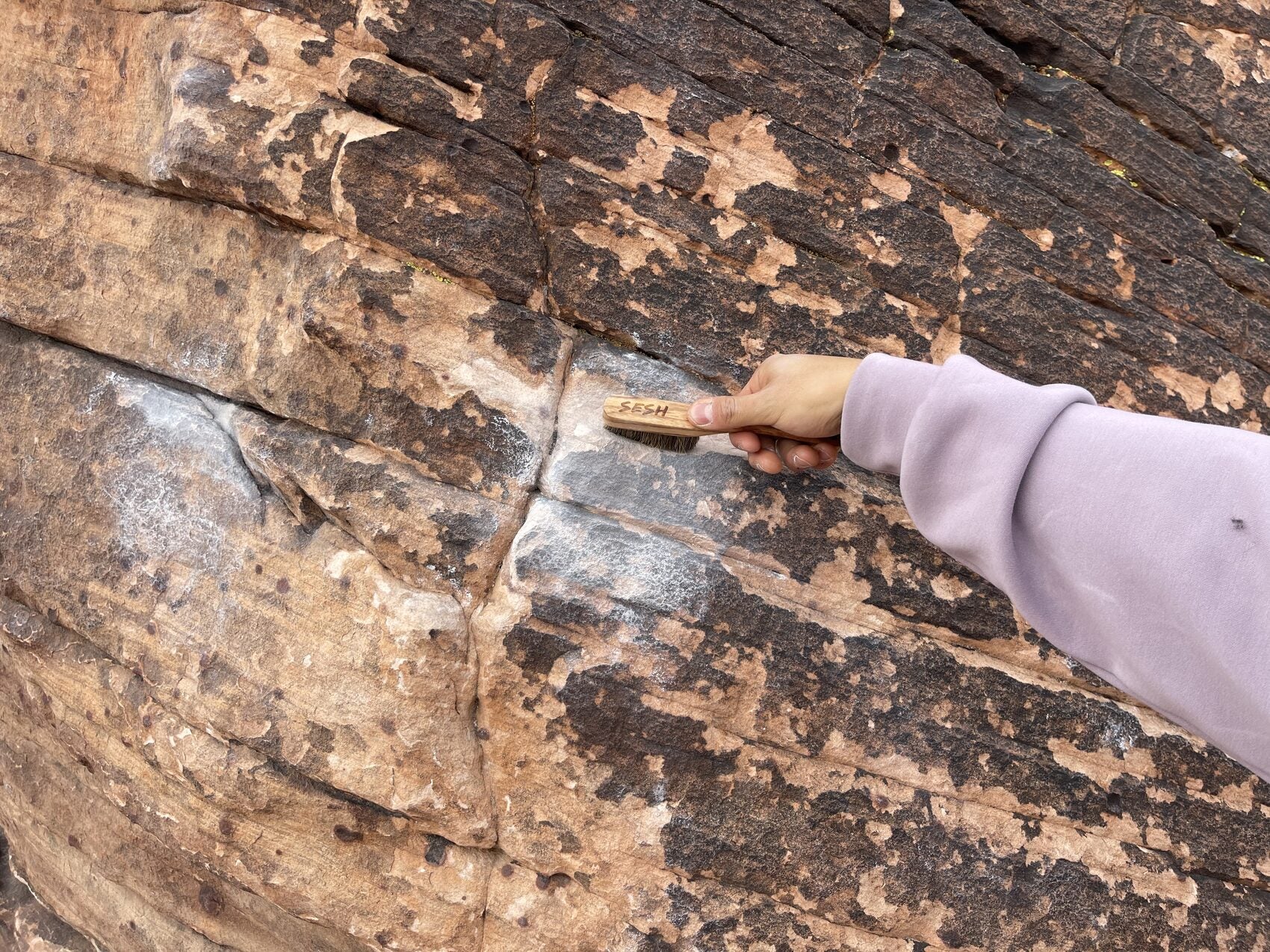
- Brush your holds. Caked-on chalk glazes over and turns greasy. A quick brush resets the friction better than dumping on more.
If you're tearing through a bag, odds are you're using too much. A 200g bag of pure chalk goes a long way on thin layers and brushed holds.
Gym rules: why chalk balls and liquid exist
Loose chalk dust is a genuine headache indoors. It hangs in the air, settles onto every hold, and makes breathing rough in a gym that doesn't move much air. So more and more gyms restrict or flat-out ban loose chalk and ask for chalk balls or liquid instead.
- Chalk balls meter out a controlled amount through a mesh shell. The Sesh Chalk Ball is refillable and packed with pure magnesium carbonate, so you top it off from a block or bag instead of buying a fresh ball every time. The chalk ball vs loose chalk breakdown covers when each one earns its spot.
- Liquid chalk lays down an alcohol-based coat with almost no dust. Solid as a gym-legal base layer.
For a home wall or an outdoor setup where nobody cares about dust, a roomy open bucket like the Bolder chalk bucket makes more sense: wide mouth, easy to plunge both hands in, easy to share at the base of a problem. The best chalk bucket guide covers what separates a bucket you'll keep from one that tips over in the dirt.
Best climbing chalk for your situation
The best chalk comes down to your hands and where you climb. Here's the short list.
Best all-around (and best value): pure, medium-chunky loose chalk. Full coverage with control, and per ounce it's the cheapest way to buy real chalk. A 200g bag of Pow Day covers most climbers indoors and out.
Best for sweaty hands: start with pure chalk applied thin and reapplied often. If you still grease off, add a liquid base coat underneath, and only reach for a drying-agent chalk if pure genuinely can't keep up. Drying agents work, but they cost you skin over a season.
Best for bouldering: chunky loose chalk in an open chalk bucket you can plunge both hands into between burns. Chunky gives you grip control and less airborne haze than powder-fine.
Best on a budget: block chalk or a big bag of pure loose. Skip the boutique tins, since they're the same magnesium carbonate at two to three times the price per ounce. Pow Day is the cheapest pure option in the comparison above.
Best gym-legal chalk: a refillable chalk ball, or a liquid base coat where loose chalk is banned. Both keep the dust down.
Purest, no additives: anything that's 100% magnesium carbonate and means it. Pow Day, or the pricier Friction Labs and Rúngne. If the label is cagey about what's inside, assume it's been cut.
Start with pure magnesium carbonate, keep the layer thin, and match the format to where you actually climb.
FAQ
Is climbing chalk the same as gymnastics chalk? Yep. Both are magnesium carbonate, the same compound. Climbing products might be ground to a different texture, but chemically there's no daylight between climbing and gymnastics chalk.
Is climbing chalk just blackboard chalk? No. Blackboard chalk is mostly calcium carbonate or gypsum. Climbing chalk is magnesium carbonate, which soaks up moisture far better. Different compounds, not interchangeable.
Does more expensive chalk climb better? Not really. Price usually tracks packaging, branding, or added drying agents more than it tracks grip. Pure 100% magnesium carbonate is the benchmark. A bag that's upfront about being pure usually beats a pricier blend that's cagey about what's inside.
Are drying agents in chalk worth it? Only if your hands sweat through pure chalk. Drying agents push absorption harder, which helps the very sweaty, but they also dry and crack your skin faster over time. Start with pure magnesium carbonate and add a drying agent only when you actually need it.
Why do some gyms ban loose chalk? Loose chalk dust hangs in the air, coats the holds, and is rough on breathing in an enclosed space. Plenty of gyms restrict it for air quality and ask for chalk balls or liquid, which throw off far less dust. Check your gym's policy before you show up with loose chalk.
How long does a bag of chalk last? Depends how heavy-handed you are, but a 200g bag of pure chalk lasts most climbers a long time when it goes on in thin layers. If you're emptying one fast, you're probably over-chalking. Use less and brush your holds.
What's the purest climbing chalk? Any chalk that's 100% magnesium carbonate with nothing added. Pow Day is pure and the cheapest pure option here; Friction Labs and Rúngne are pure too, but cost two to three times as much per ounce. "Pure" is worth checking the label for, since drying agents and fillers are common in cheaper bags.
What's the best chalk for sweaty hands? Start with pure chalk applied thin and often. If you still sweat through it, add a liquid chalk base coat underneath, and only then consider a chalk with a drying agent. Drying agents pull more moisture but dry your skin faster, so treat them as a last resort, not a starting point.
Get the chemistry right first: pure magnesium carbonate, thin layers, brushed holds. Then match the format to where you climb. For outdoor and dust-friendly sessions, Pow Day Chalk is 100% magnesium carbonate, medium-chunky, 200g. For gyms that police the loose stuff, the refillable Sesh Chalk Ball keeps the dust down and tops off from any block or bag.